
How Freeze-Thaw Cycles Affect Your Pool Over Winter
📅 March 30, 2026 · ⏱ 4 min read · ✍️ Dolphin Pool & Spa Team
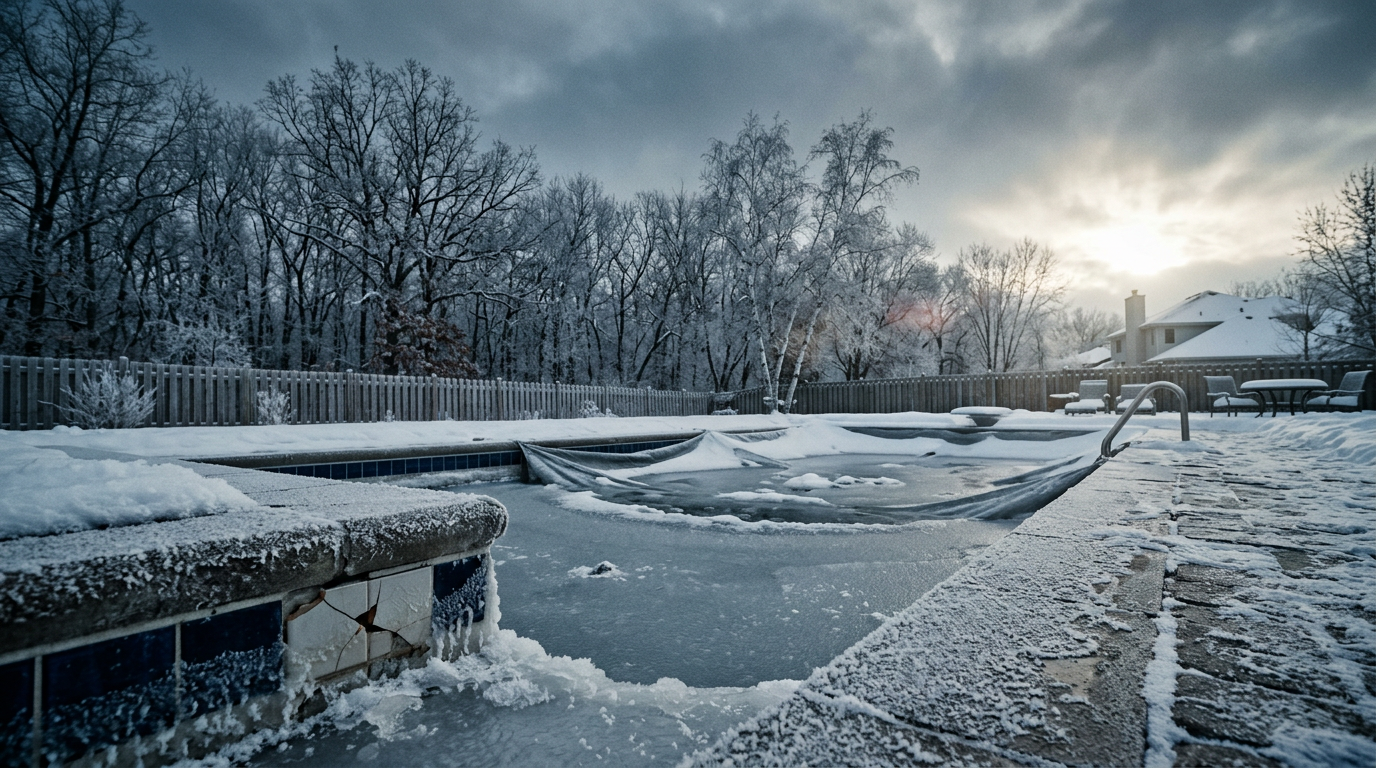
Images are AI generated and do not depict an actual pool or Dolphin Pool & Spa location.
Minnesota winters don't just sit still — they push and pull, freeze and thaw, sometimes multiple times in a single week. For your pool, that constant back-and-forth is far more damaging than one steady deep freeze. Understanding what freeze-thaw cycles actually do to your pool is the first step toward protecting it — and avoiding some of the most expensive repairs a pool owner can face.
Pro Tip from Dolphin Pool & Spa
The best defense against freeze-thaw damage is a proper fall closing — blown-out lines, drained equipment, and the right water level. If you're unsure whether your pool was closed correctly last fall, have a professional inspect it before startup this spring. Catching problems early is always cheaper than fixing them mid-season.
1 What is a freeze-thaw cycle?
A freeze-thaw cycle happens when temperatures drop below 32°F, causing water to freeze and expand, then rise back above 32°F, causing that ice to melt and contract. In Minnesota, this can happen dozens of times between November and March — sometimes within the same 24-hour period during early winter and early spring.
Here's the key physics: water expands approximately 9% when it freezes. That might not sound like much, but inside a confined pipe, tile grout line, or equipment housing, that expansion creates enormous pressure. Multiply that by 30 or 40 cycles over a winter and the cumulative damage can be significant.
2 Underground plumbing
This is the most expensive freeze-thaw damage a pool owner can face. If your pool lines weren't properly blown out and plugged at closing, any residual water left in the pipes can freeze, expand, and crack the PVC underground. You often won't know it happened until spring — when you fire up the system and water starts disappearing or won't circulate properly.
Underground pipe repairs frequently require excavation to locate and replace the damaged sections. Prevention — a proper fall blowout — costs a fraction of the repair.
Heads up: If you notice your pool losing water faster than normal after opening, or if your pump is struggling to maintain pressure, cracked underground lines may be the culprit. Call us before running the system for extended periods — continued operation can worsen the damage.
3 Waterline tiles and grout
Tile grout is porous. Over time, water seeps into microscopic cracks in the grout, freezes, expands, and slowly forces tiles away from the pool wall. If you're noticing cracked, loose, or popped tiles at the waterline each spring, freeze-thaw damage is almost certainly the cause.
Left unaddressed, small tile issues become larger structural problems as water gets behind the bond coat and into the pool shell itself. Regrouting or retiling a section early is far less costly than a full waterline tile replacement down the road.
4 Concrete decking and coping
The concrete deck and coping — the material that caps the pool edge — take a beating from freeze-thaw cycles every winter. Water seeps into small surface cracks, freezes, and widens those cracks season after season. What starts as a hairline crack can become a trip hazard or a structural concern within a few years if left untreated.
Sealing your concrete deck every few years is one of the simplest and most cost-effective ways to slow this process significantly.
5 Pool equipment
Pumps, filters, heaters, and chlorinators all contain water passages. Any residual water that wasn't drained at closing can freeze inside equipment housings and crack them — often in ways that aren't visible until you start the system in spring. This is why draining equipment completely at closing is non-negotiable in a Minnesota climate.
|
|
6 The pool shell itself
Vinyl liner pools can develop brittleness and stress cracks if the water level drops too low over winter, leaving sections of liner unsupported through repeated freeze-thaw cycles. Fiberglass pools can experience osmotic blistering if groundwater pressure and freeze cycles aren't managed properly. Even gunite and plaster pools can develop surface crazing and spalling over many winters.
7 How proper winterization protects your pool
The good news is that freeze-thaw damage is almost entirely preventable with a thorough fall closing. Here's what a proper Minnesota winterization includes:
|
|
8 What to inspect at spring opening
Every spring, before starting your equipment, do a slow walk-around inspection with freeze-thaw damage in mind. Look for:
|
|
Catching freeze-thaw damage at opening — before the pool is running — gives you the best chance of an affordable repair. Catching it mid-summer after weeks of water loss and equipment strain is a much more expensive conversation. With a careful eye each spring and a solid closing each fall, your pool can handle decades of Minnesota winters without major damage.
Dolphin Pool & Spa Reminder
Not sure if your pool came through winter in good shape? Our spring opening service includes a full equipment and shell inspection. We'll spot freeze-thaw damage early and give you an honest assessment of what — if anything — needs attention before you start swimming.
Let us check your pool after winter.
Dolphin Pool & Spa offers professional pool openings starting at $259.99. We handle everything — cover removal, equipment inspection, startup, water testing, and a full safety check. Serving Plymouth and the greater Twin Cities area.
Schedule Your Opening →
Your Happy Dolphin Pool & Spa Team
Serving Minnesota pool owners since 1988 · 3405 Hwy 169 N, Plymouth, MN · 763-542-9000