
Algae Prevention Tips to Start the Season Right
Monday, May 18, 2026 | Your Happy Dolphin Pool & Spa Team
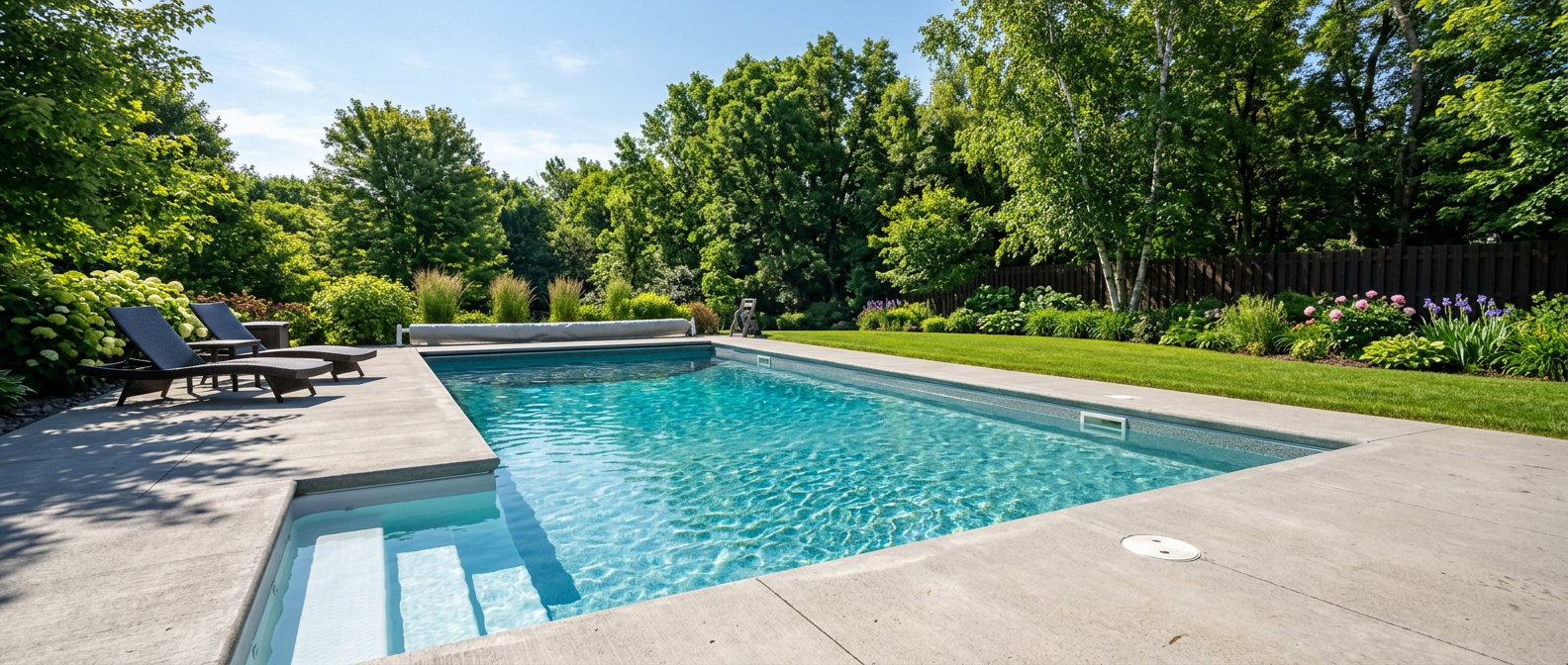
Images are AI generated and do not depict an actual pool or Dolphin Pool & Spa location.
Algae doesn't take a vacation over winter — it goes dormant and waits. The moment your water warms up and your chemistry slips, it's ready to bloom.
The good news: preventing algae from ever taking hold takes a fraction of the effort and cost of treating it after the fact. If you've ever opened your pool to a swamp-green mess, you know exactly what we mean. Multiple shock treatments, hours of brushing, running your filter around the clock — and often a significant chemical bill.
Here's what you need to do at the start of this season to make sure algae never gets a foothold.
1 Start the Season with a Proper Shock
Before you can prevent algae, you need to start with clean water. Your opening shock burns off the organic load that built up over winter and kills any algae that started growing under your cover. Use a calcium hypochlorite shock — like BioGuard Burn Out — and bring your free chlorine level to at least 10–12 ppm before you begin regular maintenance.
Let the filter run continuously until the water clears completely before adding any algaecide. High chlorine and algaecide work against each other — adding algaecide while chlorine is still elevated just burns it off and wastes your money.
💡 Pro Tip: Shock at Dusk
Sunlight burns off unstabilized chlorine quickly. Shock at dusk or nighttime so that opening dose works overnight with maximum effectiveness.
2 Nail Your Water Chemistry from Day One
Balanced water is your first and most important line of defense. Algae thrives when pH is high, chlorine is low, or cyanuric acid levels are out of range. Get your chemistry dialed in at the start of the season and test it weekly all the way through closing.
⚠️ Watch Your pH Closely
At pH 7.8, chlorine is only about 33% as effective as it is at 7.4. Many pool owners think they have a chlorine problem when it's really a pH problem. Test pH every time you test chlorine.
3 Keep Phosphates Under Control
Phosphates are algae fertilizer. They enter your pool from leaves, grass clippings, rainwater runoff, some pool chemicals, and even certain municipal water supplies. Algae blooms are far more likely — and far more aggressive — when phosphate levels are elevated.
Start the season with a phosphate test and treat if levels are above 200 ppb. We carry Natural Chemistry PHOSfree, which removes phosphates quickly without affecting your other chemistry. Making this a monthly habit throughout the season is one of the simplest things you can do to keep algae from ever getting a foothold.
4 Add a Preventative Algaecide at Opening
Even with good chlorine levels, a quality algaecide gives you an extra layer of protection — especially on hot weeks when chlorine demand spikes or you're away and can't stay on top of testing. Add your algaecide after your opening shock has dissipated and chlorine is back to 3–4 ppm.
Our #1 Recommended Algaecide
BioGuard Algae Complete
Most algaecides fight algae one way. Algae Complete fights it two ways at once. It's BioGuard's most advanced algaecide — a dual-action formula that combines polyquat and copper-based active ingredients into a single weekly treatment. That matters because different algae types respond differently to different technologies. Polyquat alone can struggle with black and mustard strains. Copper alone can be limiting. Together, they cover the full spectrum.
Algae Complete also includes a built-in surface and waterline cleaner that helps break loose algae that clings to walls and steps, plus a clarifier that pulls dead algae out of the water faster after treatment. You're not just killing algae — you're cleaning up after it at the same time.
And if an outbreak does occur, you don't need to buy a second product. The same bottle handles both prevention and treatment — just use the higher remedy dose. One product. One shelf. Full season covered.
Note: Not compatible with biguanide sanitizer programs or hydrogen peroxide treatments.
🛒 Also Worth Adding to Your Opening Order
- BioGuard Back Up — Works alongside Algae Complete as a backup barrier. Especially effective on weeks with heavy bather load or after a rainstorm flushes in new organic material.
- Natural Chemistry PHOSfree — Removes phosphates, the primary food source for algae. Use monthly or any time after significant rainfall or heavy debris.
- BioGuard Optimizer — A once-a-season borate-based water conditioner that inhibits algae growth, softens water feel, and reduces overall chlorine demand. We're dedicating our next article entirely to this product — it's that good.
5 Brush and Circulate — Every Week
Algae gets its first grip in the spots your sanitizer reaches last: corners, steps, behind ladders, and along the waterline. Brushing breaks it loose before it can establish, sending it into the water where your chlorine and filter can do their job.
What to do every week:
- Brush walls and floor — use a nylon brush for vinyl liners; pay extra attention to corners, steps, and shaded areas
- Run your pump at least 8–10 hours per day — stagnant water is algae's best friend
- Clean your filter regularly — a clogged filter can't remove algae spores effectively
- Point return jets downward at a 45-degree angle to create a circular current and eliminate dead spots
- Skim daily during heavy pollen and debris season — organic debris raises chlorine demand fast
6 Shock Weekly — Not Just When There's a Problem
Weekly shocking is standard pool maintenance in Minnesota summers — not an emergency response. Heat, UV, bather load, rain, and wind all drive up chlorine demand. A midweek chlorine drop can give algae a window to establish, and by the time you notice a green tint on Friday, you've got a weekend project on your hands.
Shocking once a week — or after any heavy swim day or significant rainfall — keeps your chlorine reserves strong and prevents the buildup of chloramines, which smell like "pool" but don't actually sanitize.
💡 Pro Tip: Always Shock After Heavy Rain
Rain dilutes chlorine and introduces phosphates, nitrates, and organic material — everything algae loves. Make it a habit: any time you get a significant rain, shock that evening.
7 Know Your Algae: Green, Mustard, and Black
Not all algae behaves the same way. If prevention fails and you need to treat, knowing what you're up against matters.
⚠️ Mustard Algae Tricks Pool Owners
Mustard algae brushes off so easily that owners often think it's just dirt. It's not — and it will keep coming back until you treat it specifically. If you see a yellowish film in shaded spots that returns after brushing, treat it as mustard algae and use a mustard-specific algaecide along with an aggressive shock.
8 A Note on Saltwater Pools
Salt chlorine generators produce chlorine continuously, which is a real advantage for algae prevention — but they're not set-it-and-forget-it systems. At the start of the season, your salt cell isn't yet running at full efficiency, the water is still cold, and your CYA level may need adjustment. Algae can still bloom early in the season on saltwater pools if chemistry isn't dialed in.
Test your saltwater pool's chemistry just as frequently as a traditional pool until water temperatures stabilize above 65°F and your cell is running consistently.
Coming Up Next — Thursday, May 21
BioGuard Optimizer: The One-Time Investment That Pays for Itself All Season Long
We mentioned Optimizer above as a once-a-season add — but it deserves its own article. The first-year investment to bring a pool up to full borate level runs around $220. After that? Because borates don't evaporate or break down in sunlight, you only need to top off what's lost when you lower the water for closing — typically about a quarter of your level per season. In our next post we'll break down exactly how Optimizer works, why borates are such an underrated tool, and why we recommend it to virtually every pool owner we talk to. Don't miss it.
Start the Season Algae-Free
Stop in for a free water test or give us a call. We'll get your chemistry dialed in and send you home with exactly what you need — including Algae Complete and everything else on your opening list. Find us at 3405 Hwy 169 N in Plymouth — we've been the Twin Cities' trusted pool store for over 35 years.
 Call Us Now — 763-542-9000
Your Happy Dolphin Pool & Spa Team
Serving the Twin Cities metro since 1988 | Plymouth, MN | 763-542-9000