
Pool Heater Startup: Getting Your Heater Ready for Spring
Monday, May 25, 2025 | Your Happy Dolphin Pool & Spa Team
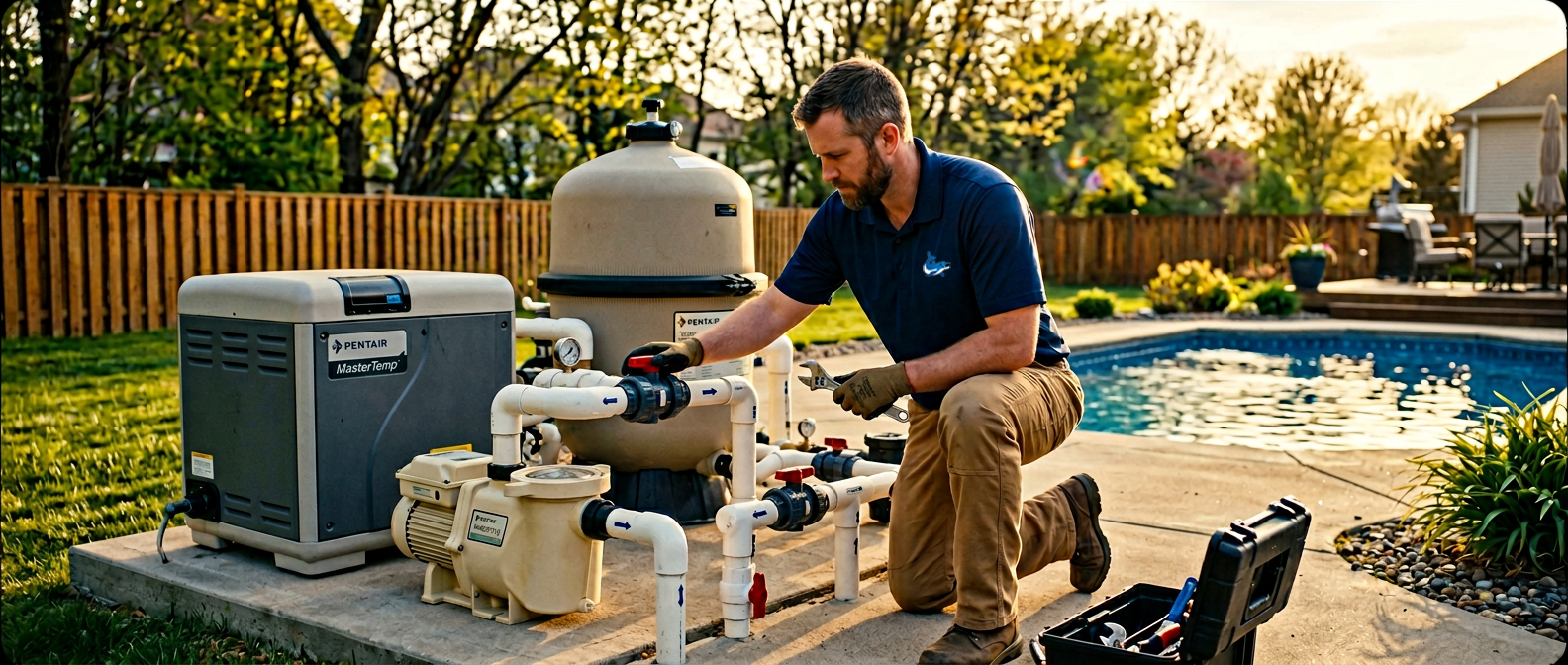
Images are AI generated and do not depict an actual pool or Dolphin Pool & Spa location.
After a long Minnesota winter, your pool heater has been sitting idle for months — and it deserves a little attention before you fire it up. Skipping the startup inspection is one of the most common (and most expensive) mistakes pool owners make in spring. A cracked heat exchanger, a tripped pressure switch, or a clogged burner orifice can turn a simple startup into a costly repair call.
This guide walks you through everything you need to check before you fire up your gas heater for the first time this season.
1 Start with a Visual Inspection
Before you touch any controls, walk around the heater and look it over carefully. Minnesota winters are hard on outdoor equipment, and what you find in this step will set the tone for everything else.
|
|
Heads Up: If you find rodent nesting inside the cabinet, do not attempt to start the heater. Nesting material near burners is a fire hazard, and chewed wiring can cause electrical problems. Clear the debris out completely and inspect all wiring before proceeding.
2 Check Your Water Flow First — Always
This is the single most important rule of heater startup: never run your heater without adequate water flow. Pool heaters require a minimum flow rate to operate safely. Running a heater with low or no flow will damage the heat exchanger — and heat exchanger replacements are expensive.
Before starting the heater, confirm the following:
- Your pool pump is running and primed (see our article How to Prime and Start Your Pool Pump After Winter if you haven't done this yet)
- All valves in the system are open — especially any bypass valves around the heater
- Filter pressure is in normal range (not high enough to restrict flow)
- All return jets in the pool are flowing
Pro Tip: Most pool heaters have a built-in pressure switch or flow switch that prevents them from firing without adequate flow. But don't rely on it as your only check — a switch can fail. Always verify flow manually before startup.
3 Inspect the Heater Plumbing Connections
The freeze-thaw cycle we get here in Minnesota is brutal on plastic and PVC fittings. Even if you properly winterized your heater, it's worth a close look at every water connection before startup.
4 Gas Heater Startup Checklist
Gas heaters — both natural gas and propane — are the most common type in the Twin Cities area. Here's how to bring one online safely after winter.
Before you ignite:
- Turn the gas supply valve to the ON position
- Check for gas odor around all connections — if you smell gas, stop and call your gas provider
- Verify the pilot light assembly is clean and free of spider webs or debris (a very common issue after sitting all winter)
- Confirm the pressure regulator on propane systems hasn't been damaged
First ignition:
- Set the thermostat to your desired temperature (78–82°F is typical for swimming)
- Follow your heater manufacturer's startup sequence — they vary by brand
- Listen for the igniter clicking and the burner lighting — it should ignite within a few seconds
- Watch for error codes on the display panel — note any codes before clearing them
- Confirm the heater is calling for heat — the thermostat set point should be higher than the current water temperature, and the burner should be actively firing
Heads Up: If your heater ignites but immediately shuts off, the most common causes are low water flow, a dirty pressure switch, or a faulty high-limit switch. Don't keep trying to restart — diagnose first. Repeated failed ignitions can flood the heat exchanger with unburned gas.
6 Balance Your Water Chemistry Before Running the Heater
This step is critical and often overlooked. Unbalanced water chemistry — especially low pH or high calcium hardness — can corrode or scale your heat exchanger very quickly once heat is introduced. Hot water accelerates chemical reactions, meaning bad chemistry does more damage faster.
Before running your heater, your water should be in these ranges:
Pro Tip: One of the biggest advantages of shopping at Dolphin Pool & Spa vs. a big box store is that BioGuard products only require 15 minutes between doses — compared to up to 4 hours for generic brands. That means you can balance all your chemistry in a single afternoon and have your heater running the same day instead of waiting until tomorrow.
7 Set Your Temperature and Runtime Strategy
Once everything checks out and your heater is running, think about how you want to manage it through the season. A few smart habits will extend the life of your heater and reduce operating costs.
|
Save money
|
Protect the heater
|
8 When to Call a Professional
Pool heater startup is one area where it truly pays to know your limits. If you encounter any of the following, stop and call for service:
- Any smell of gas — natural gas or propane
- Heater fires then immediately shuts off (lock-out condition)
- Error codes you can't identify or clear
- Visible corrosion or damage to the heat exchanger
- Water leaking from the heater body (not just condensation)
- Heater runs but water temperature doesn't rise after 60–90 minutes
- Unusual noises — banging, rattling, or hissing from the unit
What to expect: A typical gas heater raises the temperature of a 20,000-gallon pool by approximately 1–2°F per hour. That means if your pool is at 60°F and you want to swim at 80°F, plan on running the heater for 10–14 hours — not minutes. Don't call it a problem unless there's truly no rise after 60–90 minutes of confirmed firing.
Heads Up — know where the line is: Our technicians are trained to diagnose and repair pool heaters, including the gas components inside and around the unit. What requires a licensed gas contractor is any issue with the supply line from the heater back toward the source — the meter, the main line, or any buried or in-wall piping. If you suspect a leak in the supply line rather than at the heater itself, that's when you call your gas provider or a licensed plumber. When in doubt, call us first and we'll help you figure out who needs to come out.
Need Help with Your Pool Heater This Spring?
Whether you need water testing, BioGuard chemicals to get your chemistry dialed in, or service help with your heater, the team at Dolphin Pool & Spa is here for you. Stop in at 3405 Hwy 169 N in Plymouth, or give us a call — we've been helping Twin Cities pool owners for over 35 years.
 Call Us Now — 763-542-9000
Your Happy Dolphin Pool & Spa Team
Serving the Twin Cities since 1988 | 763-542-9000 | Plymouth, MN